
larimar · stone guides · real vs fake
How to Tell if Larimar Is Real: 8 No-Damage Checks
How to tell if larimar is real: 8 no-damage checks, a real vs fake comparison table and the red flags that expose dyed howlite, agate, glass and resin.
作者:LME Jewelry约 7 分钟阅读
本文目前仅提供英文版。
Key takeaways
- Real larimar is a blue form of the mineral pectolite. It has only ever been mined commercially in the Dominican Republic.
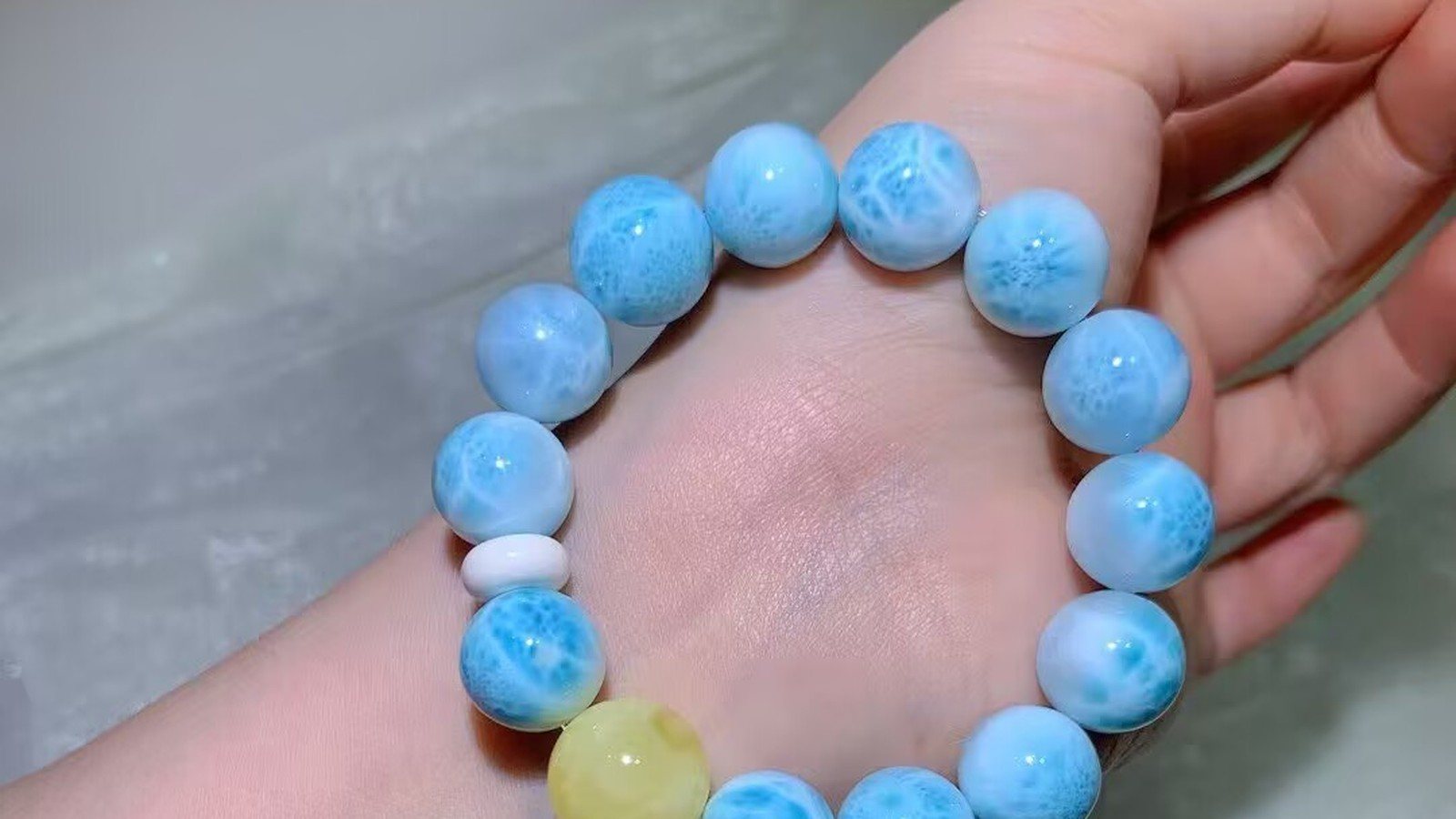
- The pattern tells you most: natural larimar has irregular white clouds and webs. Neat bands, repeated prints and neon color are warning signs.
- Most fakes are dyed howlite or magnesite, dyed agate, glass or resin. Each gives itself away in a slightly different way (see the table below).
- Skip scratch, flame and acid tests on jewelry. Larimar is soft (Mohs 4.5 to 5) and those tests can mark a genuine stone.
- Keep real larimar out of long, strong sun. Its blue is known to fade with too much light and heat.
Larimar looks like a piece of the Caribbean you can wear: soft sea-blue with white patterns drifting across it like sunlight on shallow water. It also comes from just one small mountain area in one country. When supply is that limited, imitations are never far behind.
This guide shows you how to check larimar without harming it. There are eight checks you can do at home or while shopping online, a side-by-side comparison of real larimar and its common fakes, and the questions worth asking any seller.
What Real Larimar Is (the Short Geology Lesson)
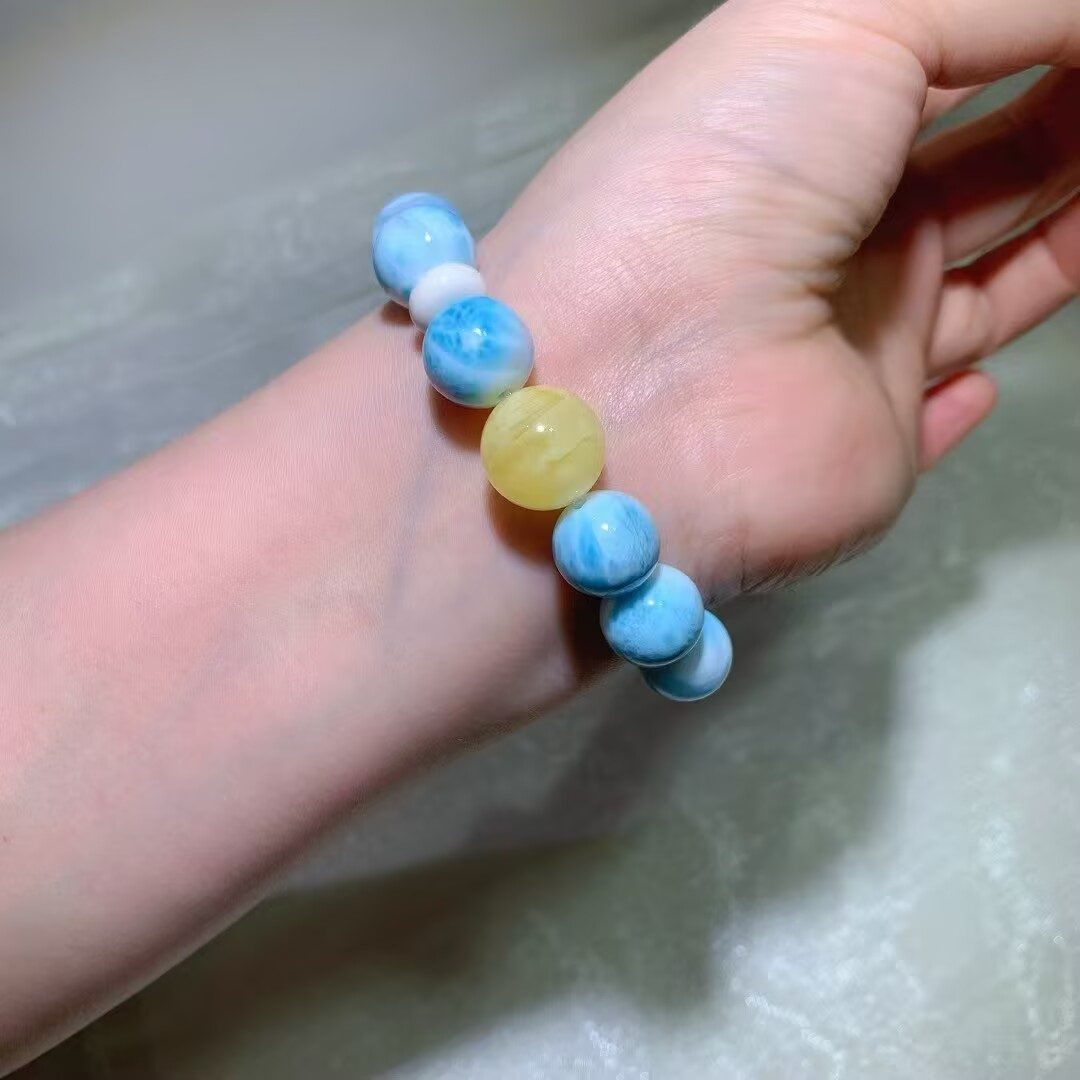
Larimar is the trade name for a blue variety of pectolite, a sodium-calcium silicate mineral. Plain pectolite turns up in several countries, but there it is white, gray or pale green. The blue kind is only known from the Sierra de Bahoruco near Barahona in the southwestern Dominican Republic. Mineral references attribute the blue to copper sitting in the mineral structure. Researchers describe it forming in cavities and veins of old volcanic rock, sometimes near native copper.
| Property | Real larimar |
|---|---|
| Mineral | Pectolite (blue variety) |
| Only commercial source | Barahona Province, Dominican Republic |
| Hardness (Mohs) | About 4.5 to 5, softer than quartz (7) |
| Specific gravity | About 2.7 to 2.9, feels solid rather than light |
| Luster | Silky to glassy when polished |
| Transparency | Translucent to opaque |
| Typical pattern | Irregular white clouds, webs or radiating "turtle-back" shapes |
| Light sensitivity | Blue can fade with long, strong light and heat |
A little history helps too. Larimar was rediscovered on a Barahona beach in 1974. The popular story is that the name blends Larissa, the finder's daughter, with mar, Spanish for sea. Crystal lovers also call it the "Atlantis Stone" or "Dolphin Stone", but those are nicknames, not scientific terms.
Why Larimar Gets Faked
Two things make larimar a target. The source is tiny, and the finest material is uncommon: a deep, even blue with crisp white patterns. Meanwhile, cheap white stones and resins take blue dye very well. That combination means a lot of "larimar" online is something else.
Real vs Fake Larimar: Comparison Table
| What you check | Real larimar | Dyed howlite / magnesite | Dyed agate / chalcedony | Glass | Resin / plastic |
|---|---|---|---|---|---|
| Pattern | Irregular clouds, webs, radiating shapes | Gray or dark spider-web lines on flat blue | Curved or parallel bands | Swirls, or no pattern at all | Printed-looking or repeated pattern |
| Color | Soft sky to deeper blue, sometimes green-blue | Often very bright, very even | Even, slightly "inky" blue | Too uniform, sometimes too clear | Flat, sometimes too bright |
| Drill holes and cracks | Same tone right to the edge | Dark blue rings where dye pooled | Dye lines in cracks | Clean, glassy holes | Soft, sometimes rough edges |
| Under a 10x loupe | Fine fibrous, silky texture | Chalky, porous surface | Layered bands | Round gas bubbles | Uniform, sometimes bubbles |
| In the hand | Cool, solid weight | Similar weight, chalky feel | Cool, solid | Cool, can feel slick | Light, warms up quickly |
| Under a UV flashlight | Weak or no glow | Varies | Varies | Varies | Can glow brightly |
8 No-Damage Checks, Step by Step
1. Read the pattern
This matters most. Lay the bracelet flat in daylight and look at every bead. Real larimar shows irregular white patterns: clouds, webs or radiating "turtle-back" cells. No two beads match. Be wary of neat stripes or rings (a typical agate trait), the same motif on bead after bead, or lines that look drawn on.
2. Judge the color honestly
Natural larimar runs from nearly white-blue to sky blue and deeper volcanic blue, and some pieces lean green. It usually looks soft and a little cloudy. A whole strand in identical, saturated "swimming-pool" blue is more likely dyed. Small red or brown flecks can occur naturally from other minerals and are not a problem on their own.
3. Inspect the drill holes
Turn each bead so you can see into the hole. Dye soaks into porous stone and pools in holes, pits and hairline cracks, leaving darker rings or lines. Real larimar keeps a consistent tone right to the edge.
4. Use a 10x loupe
Hold the loupe close to your eye and bring the bead in until it is sharp. Real larimar often shows a fine, fibrous, almost silky texture that gives it depth. Glass tends to show round bubbles or swirl lines, and resin looks flat and even.
5. Feel the temperature and weight
Close your hand around the bracelet for a few seconds. Natural stone feels cool at first and reassuringly solid. Resin and plastic feel light and warm up almost at once. This will not catch every fake, but it rules out the cheapest ones.
6. Try a UV flashlight (optional)
A small long-wave UV flashlight can help, used in a dark room. Real larimar usually shows only a weak glow or none at all. Some resins and coated or dyed materials glow strongly. Use this as a supporting clue, not proof.
7. Check it in natural light
Artificial light flattens color and hides dye lines. Stand near a window (not in harsh direct sun) and turn the bracelet slowly. Real larimar shows gentle variation between deeper and paler zones. If the strand looks identical from every angle, look more closely.
8. Ask the seller five questions
- Where was it mined? (The answer should be the Dominican Republic.)
- Is it natural, dyed or stabilized?
- What is the bead size, and do the photos show the exact piece?
- Can you share close-ups or a video in daylight?
- How should I care for it? (A good seller will mention sun sensitivity.)
Vague answers, stock photos only, or a deal that seems too good for a one-country stone are all reasons to pause.
What Makes Good-Quality Larimar
Real does not always mean top quality. Natural larimar is usually judged on:
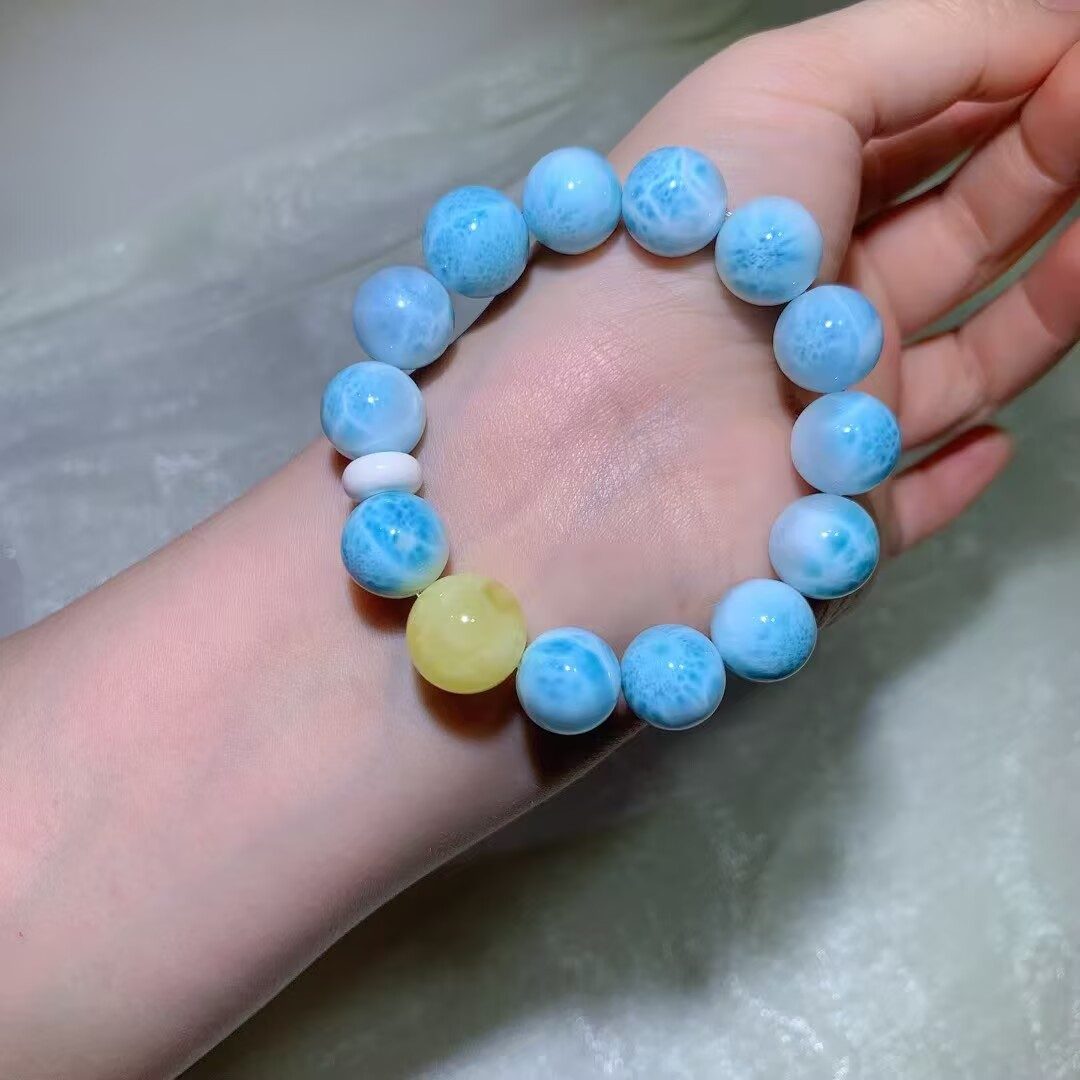
- Color depth: deeper, more saturated blue is generally more prized than pale blue-white.
- Contrast: crisp white patterns against strong blue look more striking than muddy or gray patterns.
- Evenness across a strand: well-matched beads take more sorting, and it shows.
- Surface: a smooth, even polish without pits.
Many sellers use grades like "AAA", but there is no universal grading standard, so ask for photos rather than relying on letters.
Tests to Skip on Finished Jewelry
You will find scratch tests, hot-needle tests and acid tests online. For a bracelet you plan to wear, leave them out. Larimar sits at only 4.5 to 5 on the Mohs scale, so a knife point or hot needle can leave a permanent mark on a genuine bead. If you truly need certainty, a qualified gemologist can measure refractive index and specific gravity without harming the stone.
How to Care for Real Larimar
- Keep it out of long, direct sun. Larimar's blue is known to fade with prolonged light and heat.
- Put it on last. Perfume, lotion and cleaning products can dull the polish.
- Wipe, do not soak. A soft cloth is all it needs, and stretch cord lasts longer dry.
- Store it on its own. Harder crystals can scratch it.
Our step-by-step guide on how to cleanse a crystal bracelet covers gentle, sun-free routines for larimar.
What Larimar Is Believed to Mean
In modern crystal tradition, larimar is called the "Stone of the Sea". It is associated with calm, gentle communication and emotional connection, and it is believed to encourage peaceful, loving conversation. Many people wear it as a reminder to slow down and breathe. It stacks beautifully with soft pink: try it next to our Star Rose Quartz Bracelet for a blue-and-pink pairing.
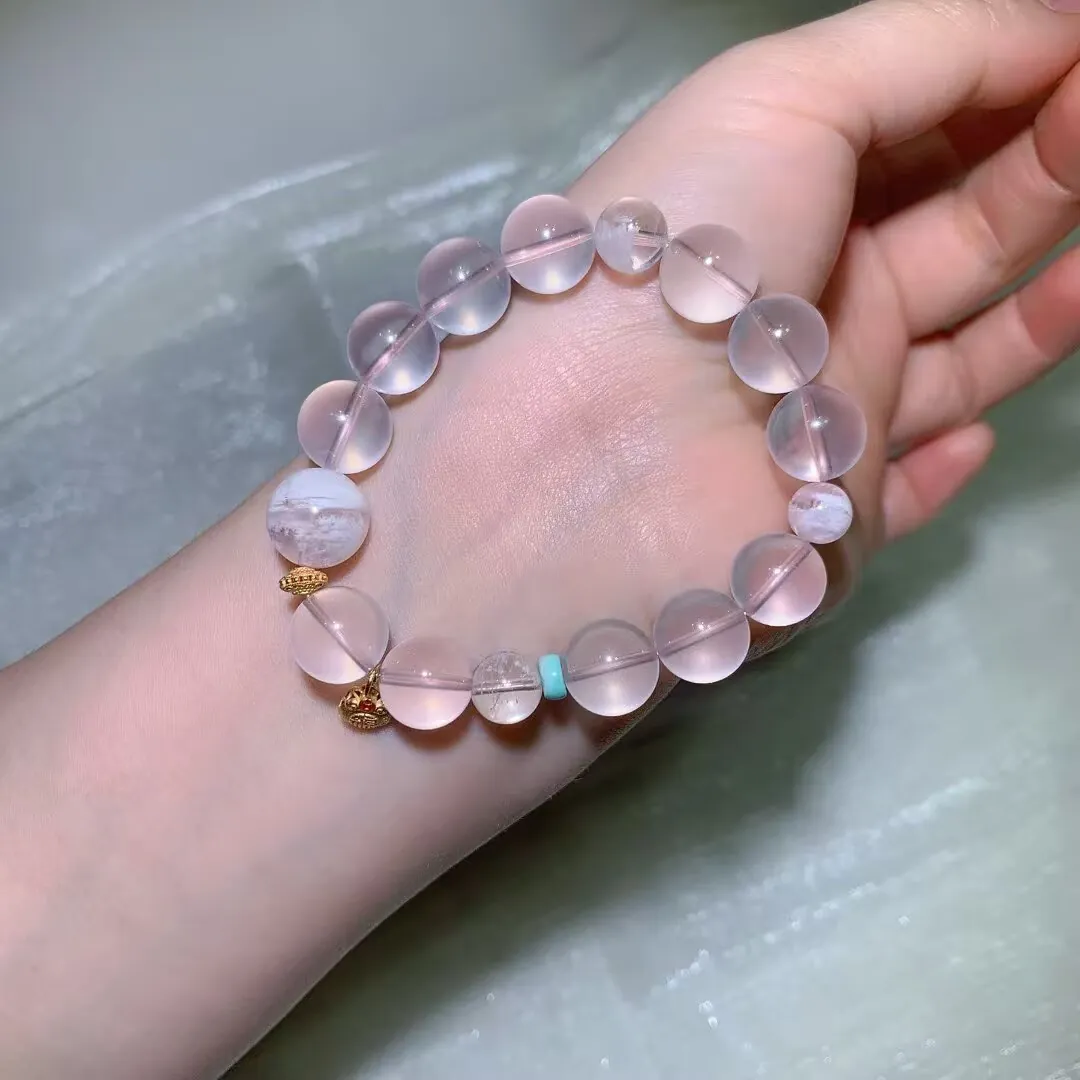 LME Jewelry天然星光粉晶手串爱自己 · 温柔12mm 莫桑比克粉晶 · 天蓝隔片与小挂饰 · 复古风银饰与金饰点缀$58查看手串 →
Our Natural Larimar Bracelet
Our Natural Larimar Bracelet uses 13.2mm natural larimar beads, and a honey-yellow accent bead. Every bead carries its own blue-and-white pattern, so color and markings vary slightly from the photos. As this guide explains, that variation is exactly what you want to see.
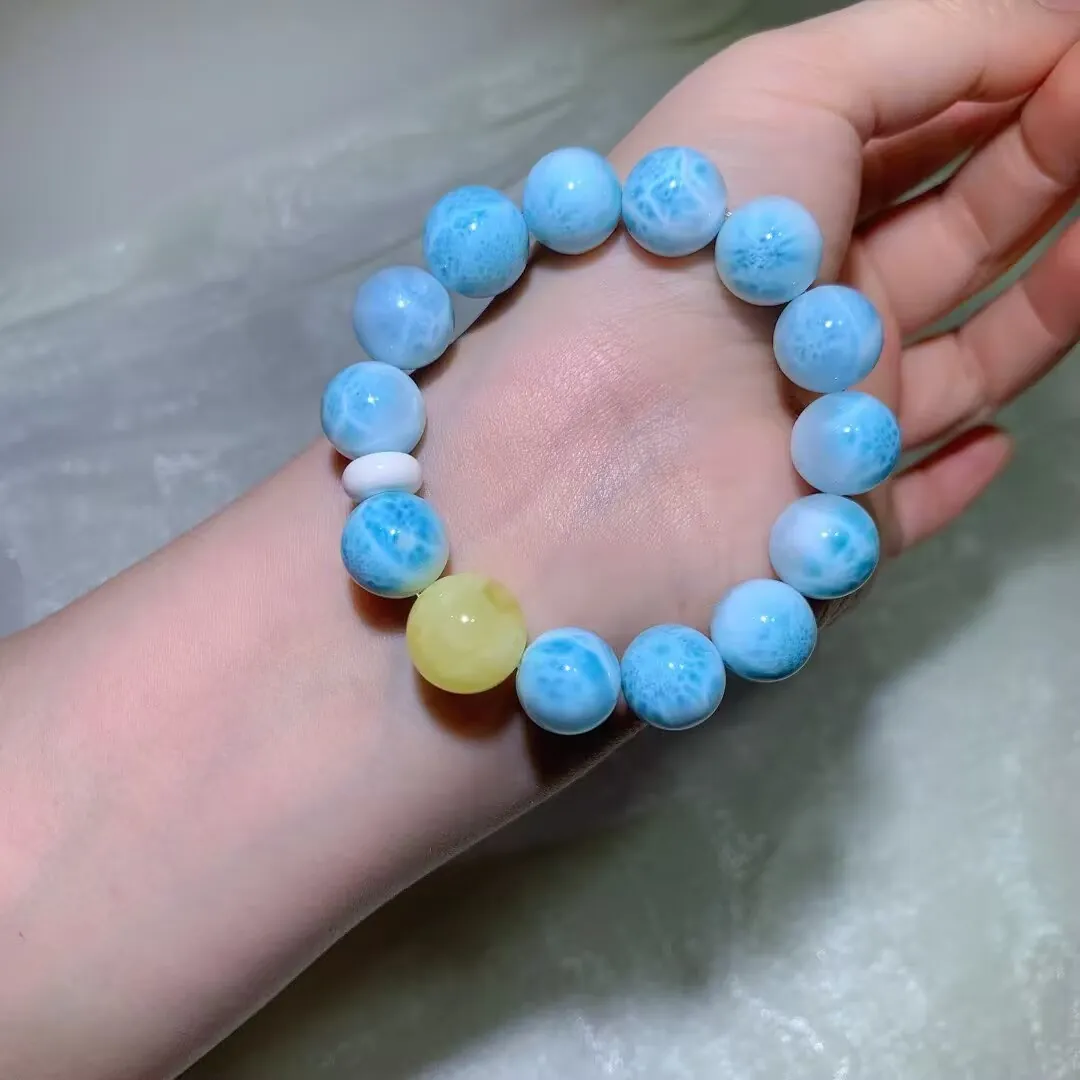 LME Jewelry天然海纹石手串平静 · 疗愈13.2mm 多米尼加海纹石 · 蜜黄色隔珠$360查看手串 →
A note from the maker Every LME bracelet is hand-strung, one strand at a time. Because every larimar bead is different, no two of our larimar bracelets look exactly alike. If you have any question about the stones we use, message us and we will answer honestly, including when we are not sure.
Sources and Further Reading
- Mindat.org, "Larimar: a variety of pectolite" (type locality and mineral data)
- International Gem Society, "Pectolite and Larimar gemstone information"
- Wikipedia, "Larimar" (history and physical properties)
- Journal of South American Earth Sciences (2024), "Origin of bluish pectolite aka larimar from the Dominican Republic"
Last reviewed by the LME Jewelry team on 2026-09-28.
Design a Larimar Piece That Is Yours
Want larimar sized to your wrist, in a different bead size or with another accent stone? Start a request on our custom page or message us on WhatsApp (+86 187 7912 3450). You can also see the full collection on our homepage.
Crystal meanings are based on tradition and are not a substitute for medical advice.
常见问题
How can I tell if larimar is real at home?
Start with the pattern and color: real larimar shows irregular white clouds or webs on soft blue, never neat bands or a printed look. Then check the drill holes for pooled dye, look through a 10x loupe for a fine fibrous texture, and feel for a cool, solid weight. None of these steps harm the stone.
What is fake larimar usually made of?
The most common imitations are dyed howlite or magnesite, dyed agate or chalcedony, blue glass and resin or plastic. Some other natural blue stones are also mislabeled as larimar.
Why is larimar so rare?
Blue pectolite has only been found commercially in one small mountain area near Barahona in the Dominican Republic. Supply is limited, and material with deep blue color and crisp patterns is a small share of what is mined.
Can larimar be dyed to look better?
Yes, some sellers dye pale material to deepen the color. Look for darker blue concentrated in drill holes and cracks, and ask the seller directly whether stones are natural or dyed.
Does a certificate prove larimar is real?
A report from a recognized gem lab is useful, but a generic "certificate of authenticity" printed by the seller is not proof on its own. Pair any paperwork with the visual checks in this guide and a seller who answers questions clearly.
Is larimar the same as turquoise?
No. Turquoise is a copper phosphate that is usually opaque and often shows dark matrix veins. Larimar is pectolite with soft white, cloud-like or web-like patterns and a slightly silky depth.
Does larimar fade in sunlight?
Larimar's blue is known to be light-sensitive and can fade with long exposure to strong sun and heat. Store it away from direct sunlight when you are not wearing it.
Can larimar get wet?
Brief contact with water will not hurt the stone, but it is softer than quartz and bracelet cord does not like soaking. Wipe it with a soft, slightly damp cloth and dry it right away.